The Robert Burns Ellisland Trust brought the home of Auld Lang Syne to Scotland’s Parliament on Wednesday 7th January, showcasing five years of place-based regeneration at a reception hosted by South of Scotland Enterprise.
Deputy First Minister Kate Forbes joined SoSE Chair Russel Griggs, Chief Executive Jane Morrison-Ross, MSPs, local businesses, and policy makers for an evening that proved a vital opportunity to connect with decision-makers and demonstrate how Scotland’s culture and heritage can drive real economic impact.

Project Director Joan McAlpine’s speech described her journey from Parliament to Ellisland, having played an instrumental role in SoSE’s formation when she moved a successful amendment to include culture and heritage in SoSE’s founding legislation. Last night she returned to Parliament representing Ellisland, a project that embodies exactly what that amendment envisioned. She commented: “I could not have imagined that almost seven years later I would stand here representing a project so closely aligned with that amendment’s ambition, and one that so clearly demonstrates SoSE’s commitment to culture and heritage as tools for community and economic regeneration.”
In the five years since the Robert Burns Ellisland Trust was formed, the site has been transformed from a site with crumbling buildings, operating deficit, no permanent staff, and reliance on volunteers, to an accredited museum creating jobs for young people and pioneering heritage tourism. SoSE’s support has been instrumental in the Trust’s success, enabling the restoration of Auld Acquaintance Cottage and helping to unlock first-stage National Lottery Heritage Fund backing for the campaign to save Burns’ only self-built home.
Joan’s message was unequivocal: “We do not need another picturesque ruin in Scotland. Our Trust’s approach is ‘conservation through use’, generating sustainable commercial income to support the heritage.” The plans, which include new hermitages for heritage accommodation, a Centre for Song in Burns’ original barn and the restoration of the historic farmnouse, will create 65 jobs and inject £1.5 million annually into the local economy.
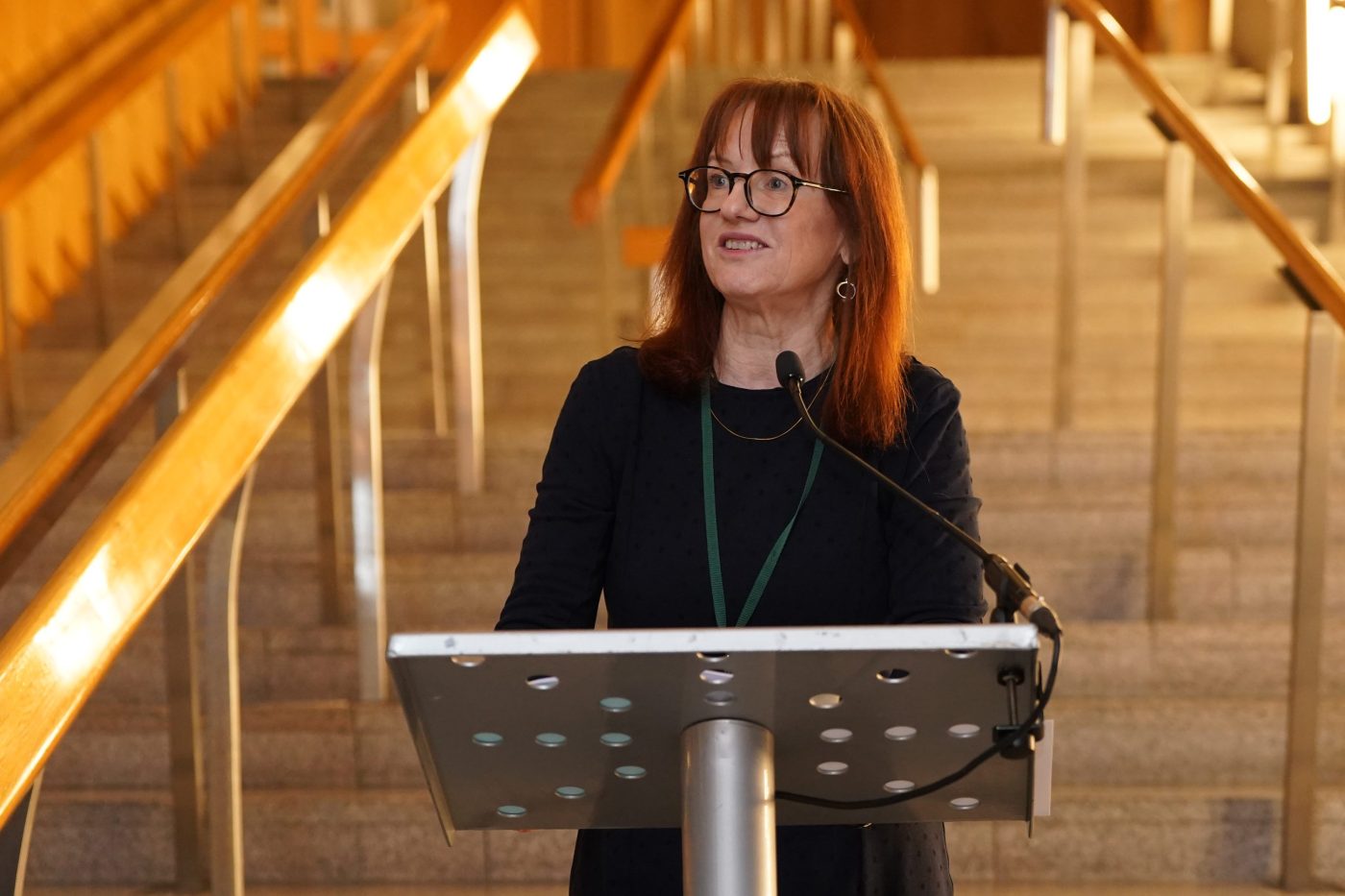
Attendees engaged closely with the Trust’s ambitious vision throughout the evening, learning about restoration plans at the information stand and in direct conversation with team members about this exemplar project for the region.
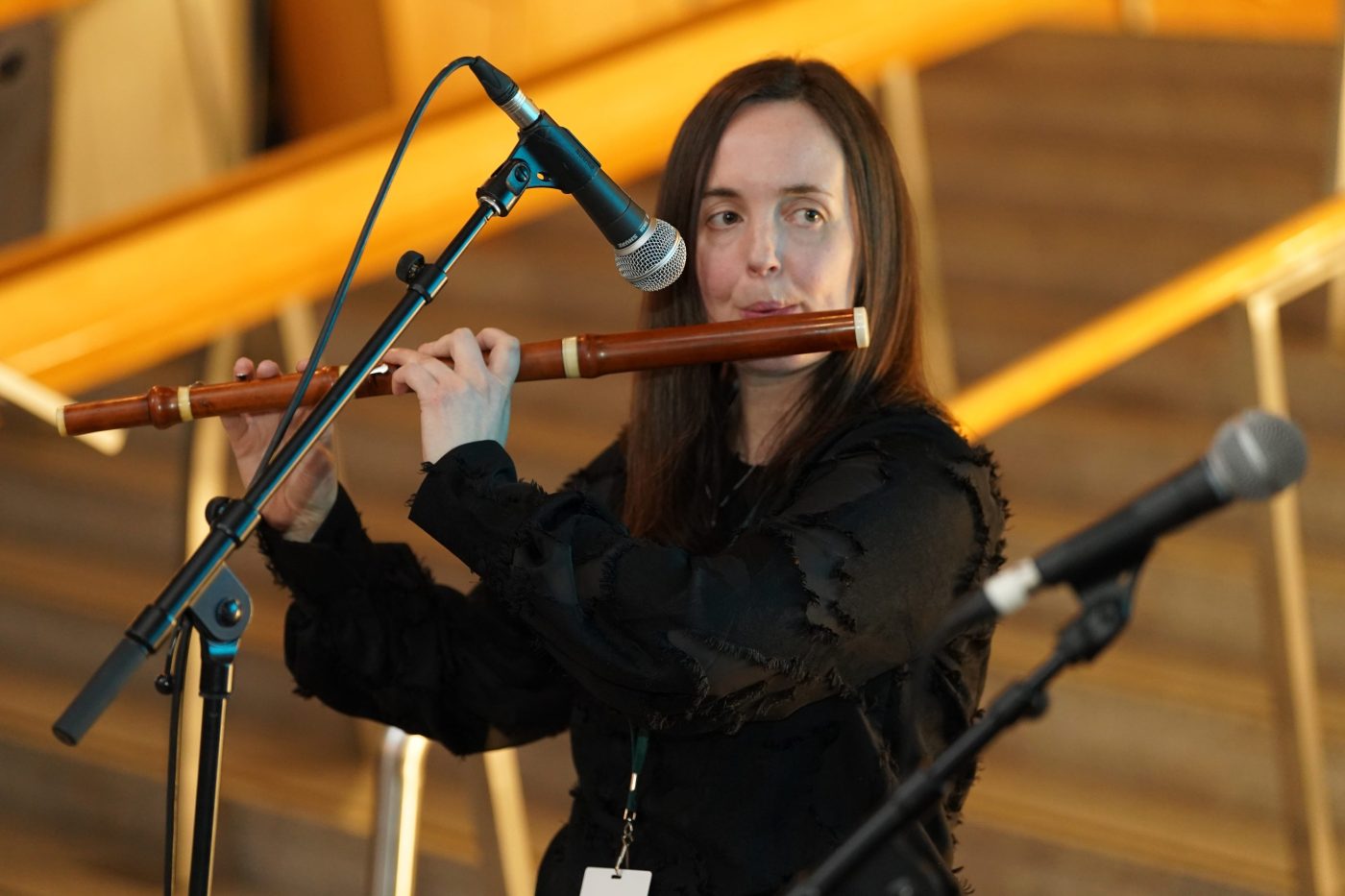
But it was the musical performance that brought Ellisland’s living cultural legacy into sharp focus, and which provided a highlight of the evening for attendees. Singer Robyn Stapleton, with Claire Mann on the precious Burns family flute and Rebecca Hill on harp, performed songs Burns wrote at the farm including John Anderson, My Jo and Aye Waukin O.
Speaking about the flute, Joan explained: “We are delighted that its haunting notes will, for the first time, echo through Scotland’s Parliament,” and by doing so created a tangible connection between Burns’s Ellisland and the present day that no amount of historical narrative could match.
Special guest, actor Sam Heughan, praised the performance and expressed interest in Ellisland and the flute. The Outlander star, who co-owns the Galloway Distillery and sponsored the evening’s drinks, spoke warmly about his childhood in Dumfries and Galloway and his decision to invest in the region through his distillery venture. His presence underscored a theme of the evening: people taking pride in the south of Scotland choosing to invest their energy, resources and passion into its building an ambitious future.
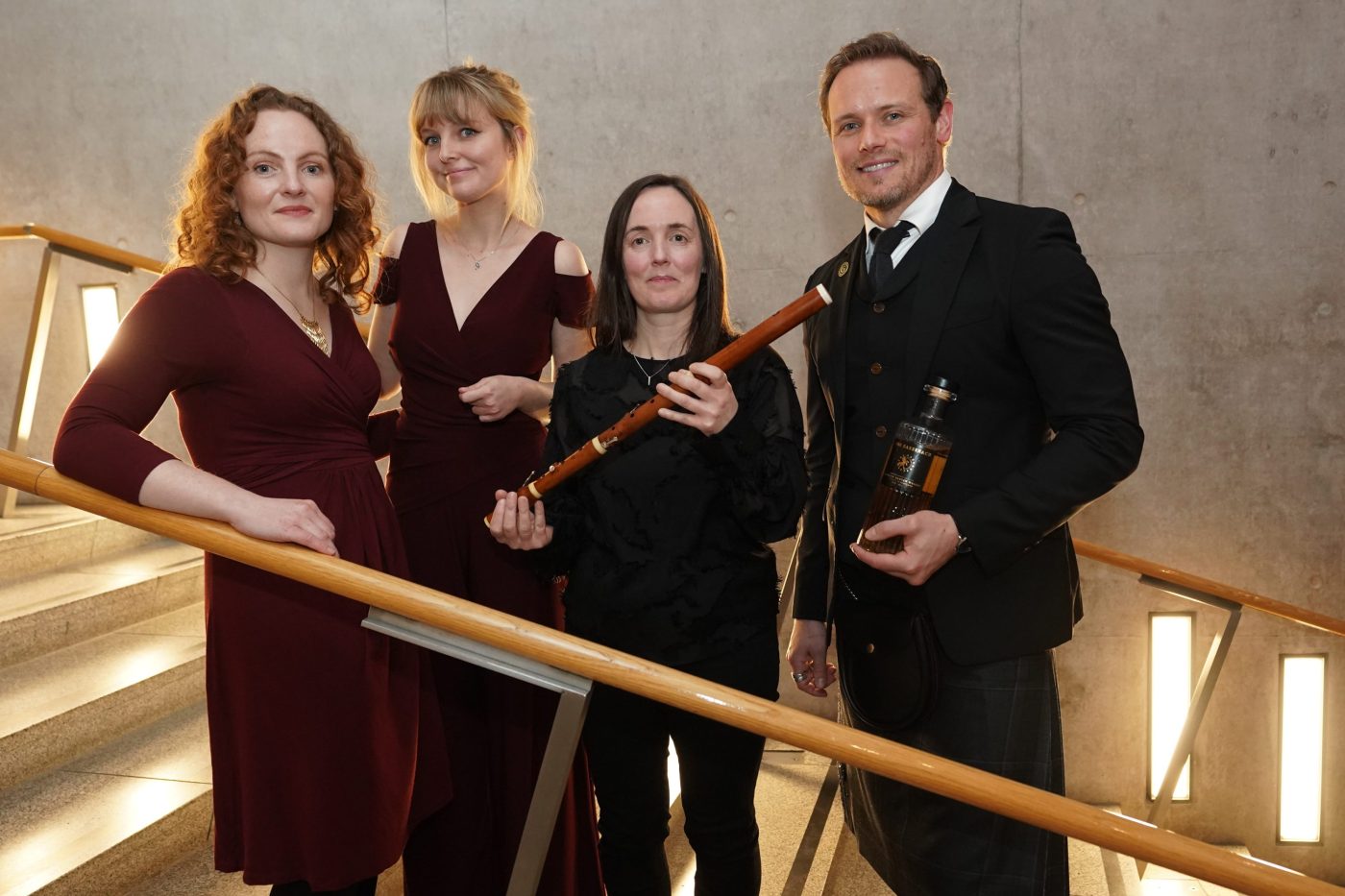
The performers closed the evening with Auld Lang Syne, performed to the original tune that Burns himself would have known.
Five years after the Trust’s formation, the same age as SoSE itself, the reception marked how far Ellisland has come and how much further it can go. The interest from politicians, businesses, and policy makers suggests growing recognition that saving the home of Auld Lang Syne is about proving that Scotland’s cultural heritage can be a powerful engine for economic regeneration and community renewal.